
Draw a Map
Every engagement with me starts with a roadmap conversation. And it's not pretty.
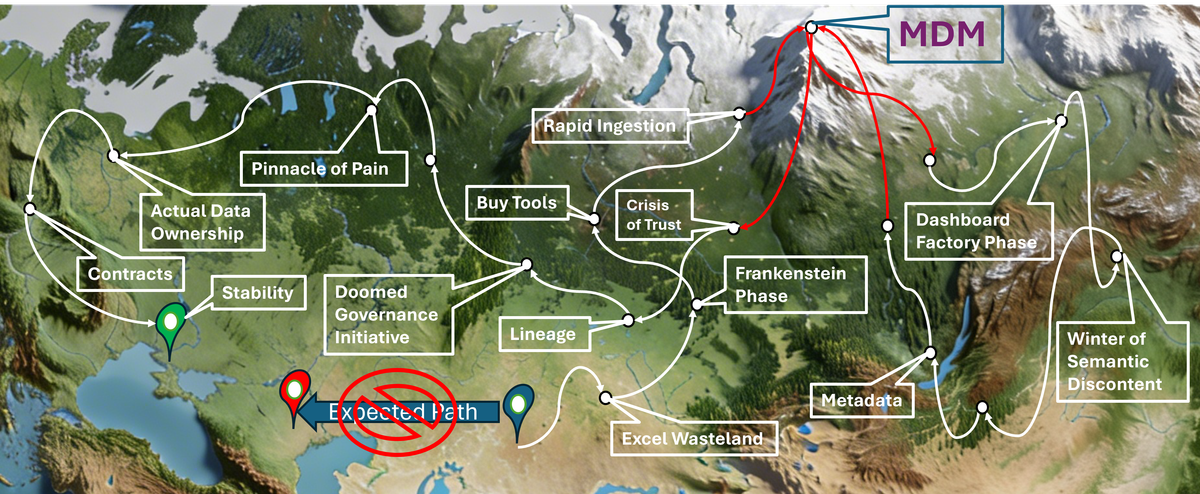
Every experience I've had with road mapping exercises produces a pretty picture of a direct and short route to a destination that the client clearly sees in their mind - and which they grudgingly agree has been adequately captured in the few hours spent eliciting requirements.
The reality of every data journey I've seen in organizations of all sizes and verticals is more like the forty year exodus of the ancient Israelites.
Sure, there's enthusiasm, engagement, investment, and a parting-of-the-Red-Sea moment that get's everyone excited, and they're certain that the land of milk and honey is just around the next bend in the road.
In some rare cases, I encounter clients who actually understand the destination of any successful, sustainable data program - ubiquitous immediacy of raw data assets to curate into valuable (and reusable) data products.
Unfortunately, it's even more rare that clients understand the full extent of the journey they've embarked upon and what it requires from a human standpoint. As a result, there are inevitable inflection points where lessons are either learned or the seeds of mistrust and disillusionment are sown.
Dashboards, reports, and distributions are NOT destinations. They are waypoints, the value of which comes from repeatable capabilities build, increasing human engagement, and decreasing time to market for new products.
There is no express route.
Delays are inevitable because humans need time to learn the terrain and navigate the inevitable pitfalls for themselves.
There three key milestones to launch or evolve a successful data program: 1) rapid ingestion; 2) master data management; and 3) federation.
These milestones should be targeted and prioritized out of the gate, regardless of where you are in your understanding and maturity when in comes to realizing true value from your data.
Does this mean you have to defer your most critical priorities for consuming data? Not at all.
Each metric and dashboard definition should include work towards achieving these three objectives:
- Get any data from any sources in days, if not hours, and make it available for immediate consumption in its raw state.
- Identify needed master and reference data to fulfill the immediate need and deliver in a repeatable fashion with full metadata, business definitions and ownership, lineage, and historicity.
- Engage data producers and consumers by exchanging accountability for access and authority. Promote self-organization under the auspices of an enterprise data leader.
The key is to invoke the principle of minimum viability. Don't over-formalize, rather focus on clarity of roles, decision rights and authorities, and consistent, repeatable tactics.
Your journey doesn't have to take forever, but cutting corners to get quick wins or relying on tribal knowledge from human bottlenecks will inevitably force unnecessary and expensive detours and ultimately erode trust.